

Attending Your First Asian Wedding? Here is Everything You Need to Know
In the UK, Asian weddings are legendary for their vibrant colours, incredible food, and deep-rooted traditions. However, if you are attending a Hindu, Sikh, or Muslim ceremony for the first time, you might feel a bit overwhelmed by the etiquette. At CardFusion, we believe every Asian wedding invitation is a bridge between cultures. This guide will ensure you feel confident and respectful from the first ceremony to the final dance.

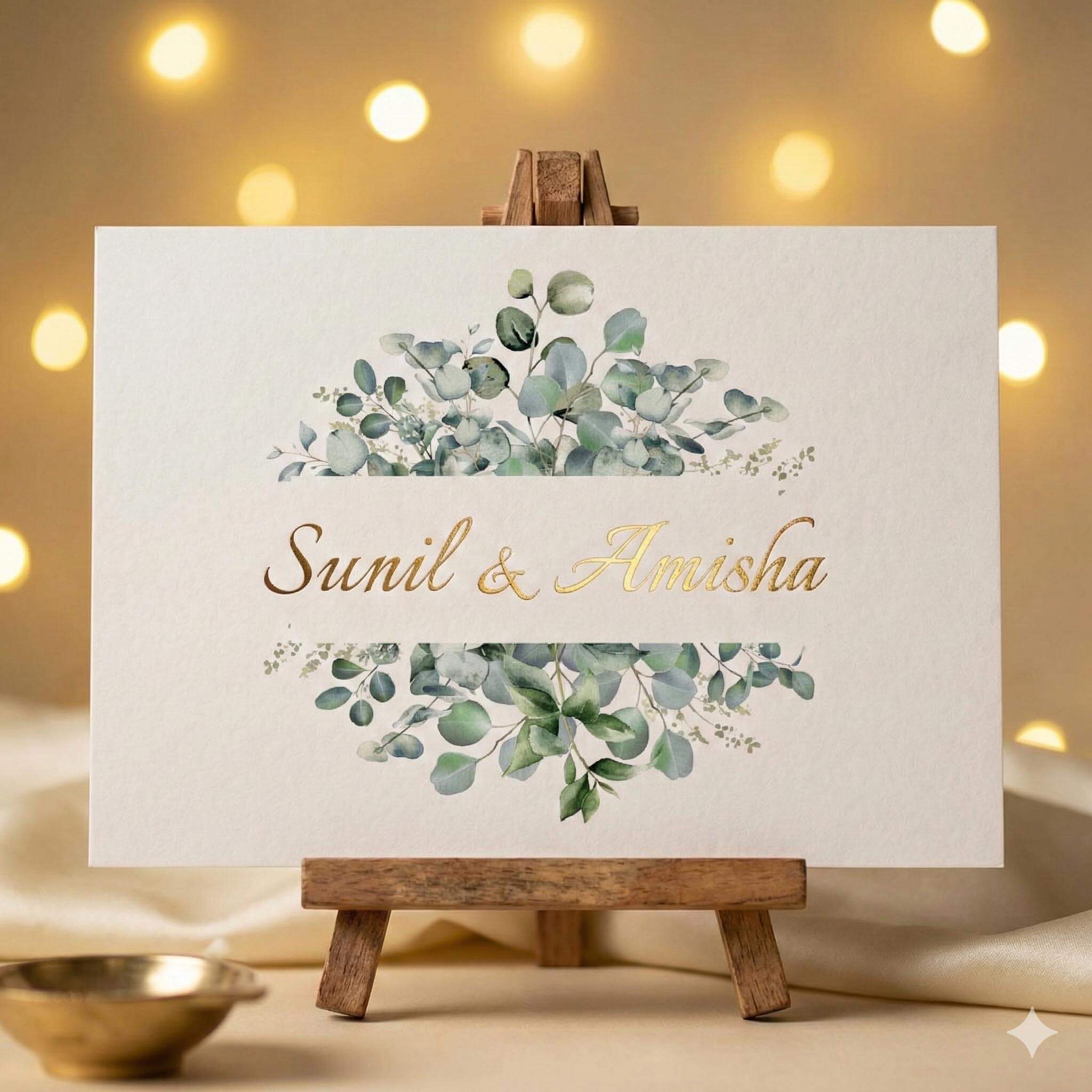
A premium 280gsm Hindu invitation featuring digital gold foiling.
1. The Sikh Wedding (Anand Karaj) Etiquette
Sikh weddings usually take place in a Gurdwara. The most important thing for guests to know is the dress code and hair covering.
- What to Wear: Modest clothing is essential. Both men and women must cover their heads inside the prayer hall. While most Gurdwaras provide headscarves, bringing your own pashmina or clean handkerchief is a respectful touch.
- The Ceremony: You will be sitting on the floor for the duration of the Anand Karaj. If you have a medical condition that prevents this, usually there are chairs at the back, but it is best to arrive early.
- Food: After the ceremony, you will be invited to “Langar” (a communal vegetarian meal). It is tradition to sit together regardless of background.
2. The Hindu Wedding (Vivah) Etiquette
Hindu weddings are often long, colourful, and highly symbolic. You will likely see the couple walk around a sacred fire (the Pheras).
- What to Wear: Vibrant colours are encouraged! Avoid wearing pure white (associated with mourning) or pure black. Traditional Indian attire like a Saree or Sherwani is always welcomed but not mandatory.
- The Symbols: Look out for the Ganesha motif on the Hindu wedding cards and at the Mandap; He is the remover of obstacles and is always honoured first.
- Footwear: You will be expected to remove your shoes before entering the Mandap (wedding altar) area.
3. The Muslim Wedding (Nikah) Etiquette
Muslim weddings are centered around the Nikah (the signing of the marriage contract).
- The Nikah: This ceremony is often short and solemn. Depending on the family tradition, men and women may be seated separately during the religious contract signing.
- Wording: You will see “Bismillah” at the top of most Muslim wedding invitations, which means “In the name of God.”
- The Walima: This is the grand reception hosted by the groom?s family. It is a time for celebration, incredible food, and socialising.
A Note on Gifts and Stationery
Many couples now use their invitations to specify “no boxed gifts,” which usually means they prefer a monetary contribution towards their new life together. You will see these details clearly printed on high-quality 280gsm inserts within the stationery suite.
Planning your own multi-cultural celebration?
At CardFusion, we specialise in bilingual and multi-faith wedding stationery that helps bridge the gap for all your guests.